

Dog Portraits in Graphite: Reveal 50 Hidden Canine Images
Dogs have an incredible variety of shapes, expressions, ears, coats, and personalities.
A tiny change in a silhouette can make one breed instantly recognizable from another.
But what happens when those familiar canine features are hidden inside a grid of small grayscale squares?
Grayscale Pixel Art Dog Portraits Coloring Book
- At first, you may see only patterns of light and dark.
- Then the ears begin to appear.
- A muzzle takes shape.
- The shadows reveal the face.
- And eventually, a dog portrait emerges.
Dog Portraits – Grayscale Pixel Art Coloring Book combines the fun of hidden-picture discovery with the quiet creative process of working with graphite pencils.
What This Book Offers
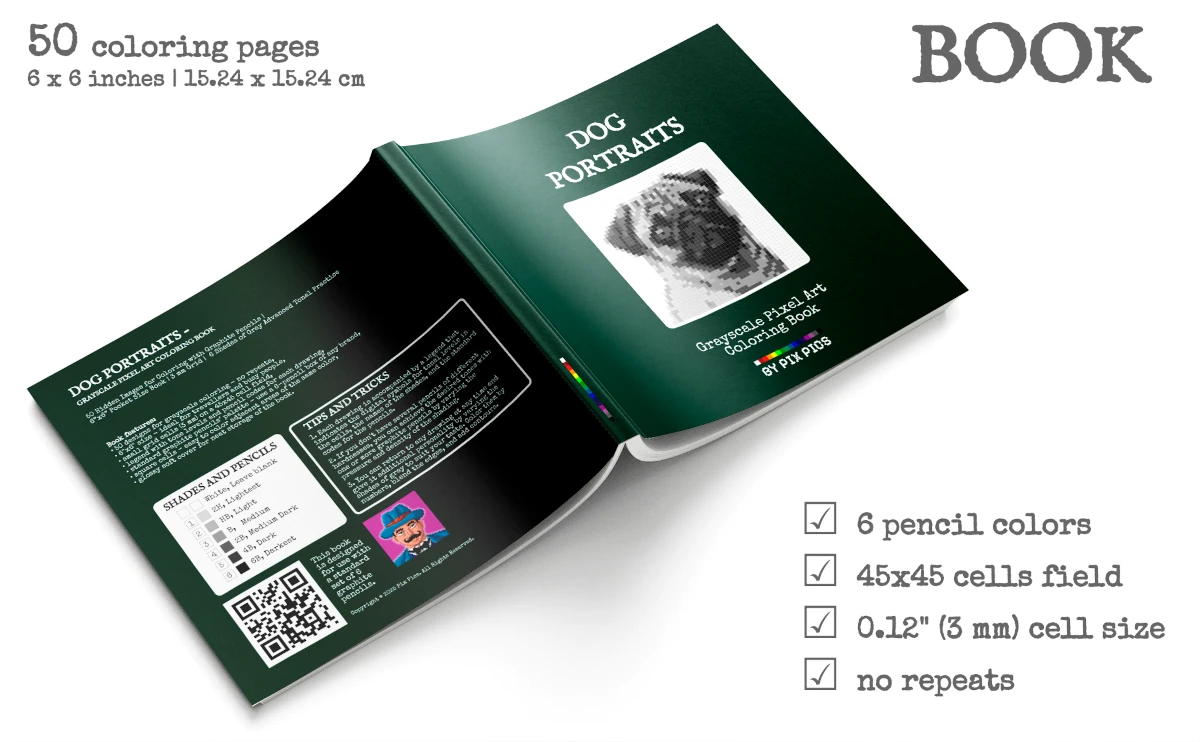
The book contains 50 different dog portraits, with one hidden image on each page.
Every design uses:
- A 45 × 45 pixel grid
- 3 mm square cells
- Six grayscale tones
- Graphite-pencil codes
- A tone legend for each design
The compact 6 × 6 inch format makes the book easy to carry and convenient for shorter creative sessions.
Inside are 50 opportunities to:
- reveal a new dog
- explore grayscale values
- practice pencil control
- observe light and shadow
- experiment with blending
- enjoy a structured creative activity
Why Dog Portraits Work So Well in Grayscale
- Color isn’t the only thing that makes a dog recognizable.
- Shape matters.
- Contrast matters.
- Light and shadow matter.
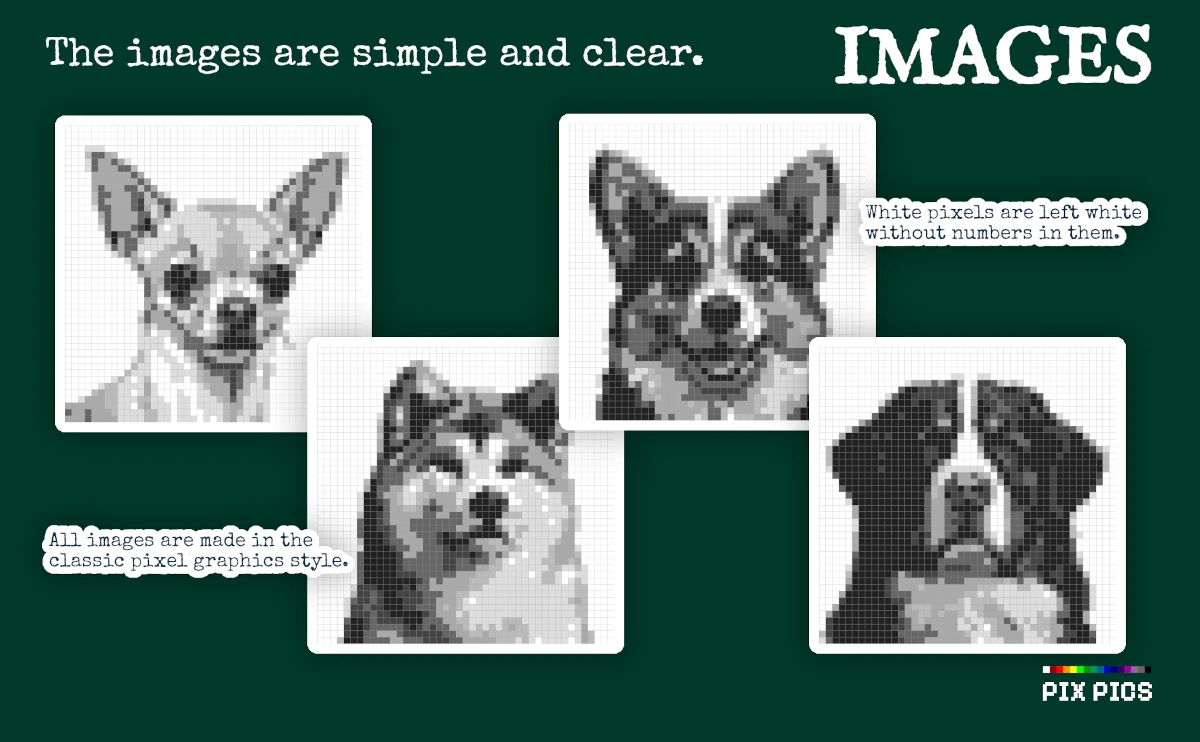
A dog’s eyes, ears, muzzle, and facial proportions can emerge through relatively simple relationships between light and dark.
That’s what makes the grayscale format particularly interesting.
Instead of depending on fur color, you begin looking at the portrait as a pattern of tonal values.
- Where is the highlight?
- Where is the deepest shadow?
- Which shapes create the outline of the face?
As you work through the grid, those relationships become visible.
How to Use These Pages
Choose a portrait and look at the grayscale legend.
Prepare the six graphite pencils or equivalent shades.
Then begin working through the numbered grid.
You can approach the image systematically:
- Complete the darkest areas.
- Add the middle tones.
- Fill the lighter values.
- Check the developing portrait.
- Add optional blending or contours.
Alternatively, work from one section to another and simply enjoy watching the dog gradually appear.
You can preserve the sharp pixel-art structure or experiment with a softer graphite finish.

Creative Ideas and Project Tips
Try to guess the dog
Before completing the picture, pause halfway through.
Can you recognize the breed?
This turns each page into a small visual challenge.
Compare different portrait styles
Keep one completed portrait strictly pixelated.
On another, add blending and contours.
Compare how the same underlying grid can produce different artistic effects.
Practice animal features
Pay attention to:
- ear shapes
- muzzle proportions
- eye placement
- light on the face
- dark areas around the features
These observations can also help when drawing animals from scratch.
Take the book with you
The 6 × 6 inch format is easy to keep in a bag or backpack.
A few pencils and one page can provide a compact creative activity almost anywhere.

Final Thoughts
Dog Portraits combines several things that work naturally together:
- Dogs
- Hidden pixel images
- Graphite pencils
- Six grayscale values
- A compact format
Each page begins as a puzzle of small squares.
With every shade you add, the image becomes clearer.
Until eventually, a dog is looking back at you from the page.
Choose your pencils, pick a grid, and discover which canine portrait is hiding inside.
Where to Buy This Book
Select a store and click the View button.